Cartilage piercings of all kinds are some of the most popular and widely obtained body piercings outside of the ‘standard earlobe’ piercing! So many people have them, and at such a wide range of ages, background, lifestyles, that it seems as though they must be easy to get and heal. Surprise, surprise! They are some of the toughest piercings to heal, due to a wide variety of factors, and require more specific care and troubleshooting than many other piercing placements.
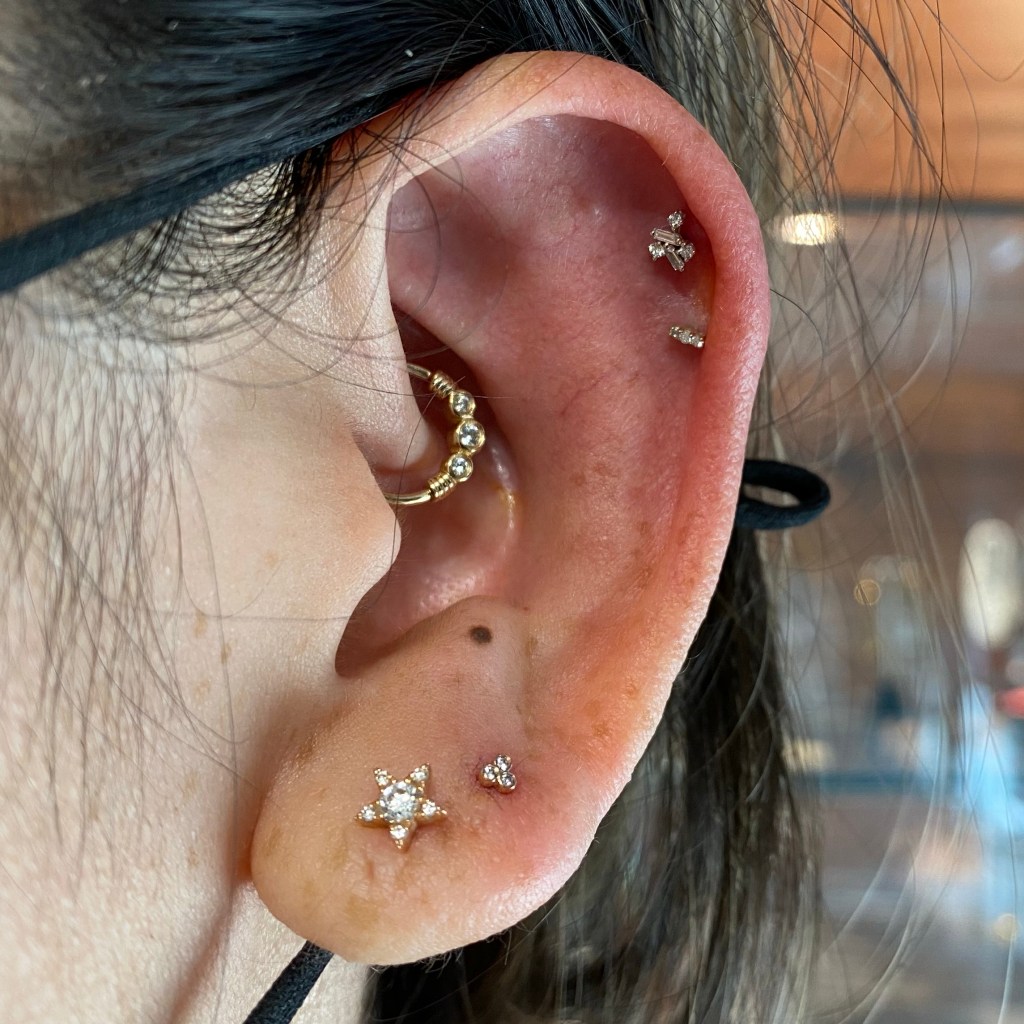
The cartilage of our bodies has no active blood flow! This is the critical factor that contributes to the long, slow healing process of our cartilage. When we sustain an injury, blood flows toward the wound, sealing it up with a scab, providing the building blocks for new tissue to grow, and carrying away waste. Your cartilage doesn’t have a supply of its own, so it slowly absorbs materials from the healthy skin around it, and that skin picks up the waste materials to carry away.
It also has no nerve endings! If you were nervous that the piercing would hurt exceptionally badly, take comfort in knowing that there are no nerves present in the cartilage itself. Just like blood flow, only the skin around the cartilage possesses nerve endings, so any discomfort you feel will be due to the thin layers of skin that sandwich the cartilage.
We use our ears all the time, and outside of the issue of blood flow, this might be the largest factor that directly affects how long it takes for your cartilage piercings to heal beside your overall level of health and wellness. Have you ever thought about how many times day things come in contact with your ear, you use a headset/headphone, press a cell phone to your ear, or lay on your ears to sleep or relax? Exerting pressure on the jewelry or the cartilage around it can lead to chronic inflammation, irritated skin, migration of the piercing, and scarring. All of this can often happen without you feeling any sort of pain from the area, which is why it is so important to avoid your healing piercing even if you don’t feel discomfort when you touch it.

Cartilage Piercing Basics:
Expected Heal Time: 6 months to 1 year+
Aftercare: Flush piercing thoroughly with comfortably hot water and sterile saline 1-3 times per day. Allow the area to naturally air dry or use a fan or blow dryer to speed up the drying process. Plan to visit your piercer after 4-6 weeks to adjust the fit of your jewelry to reduce catches/snags, increase comfort, and minimize chances for irritation or migration.


This is great! Thank you for writing this, I’ve always loved how you explained things.
LikeLike